
Philosophy now Abo

Ausgabe 174/2026
Aktuelle Ausgabe

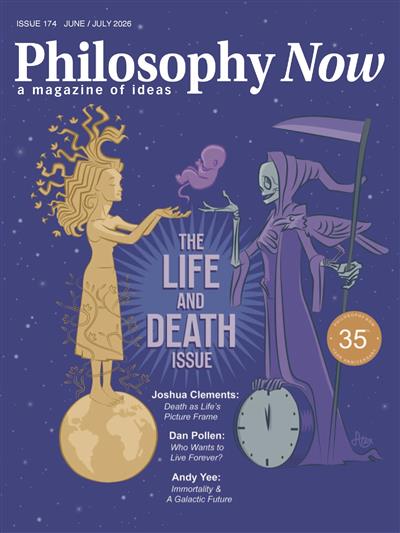
Margalit & Limits to Political Compromise
Drawing on Laure Gillot-Assayag’s reflections on the political philosophy of Avishai Margalit, the text examines central themes in his work, including morality, dignity, and the ethical foundations of political life. It places his thinking within broader debates in contemporary political philosophy and highlights its relevance to current social and ethical questions.

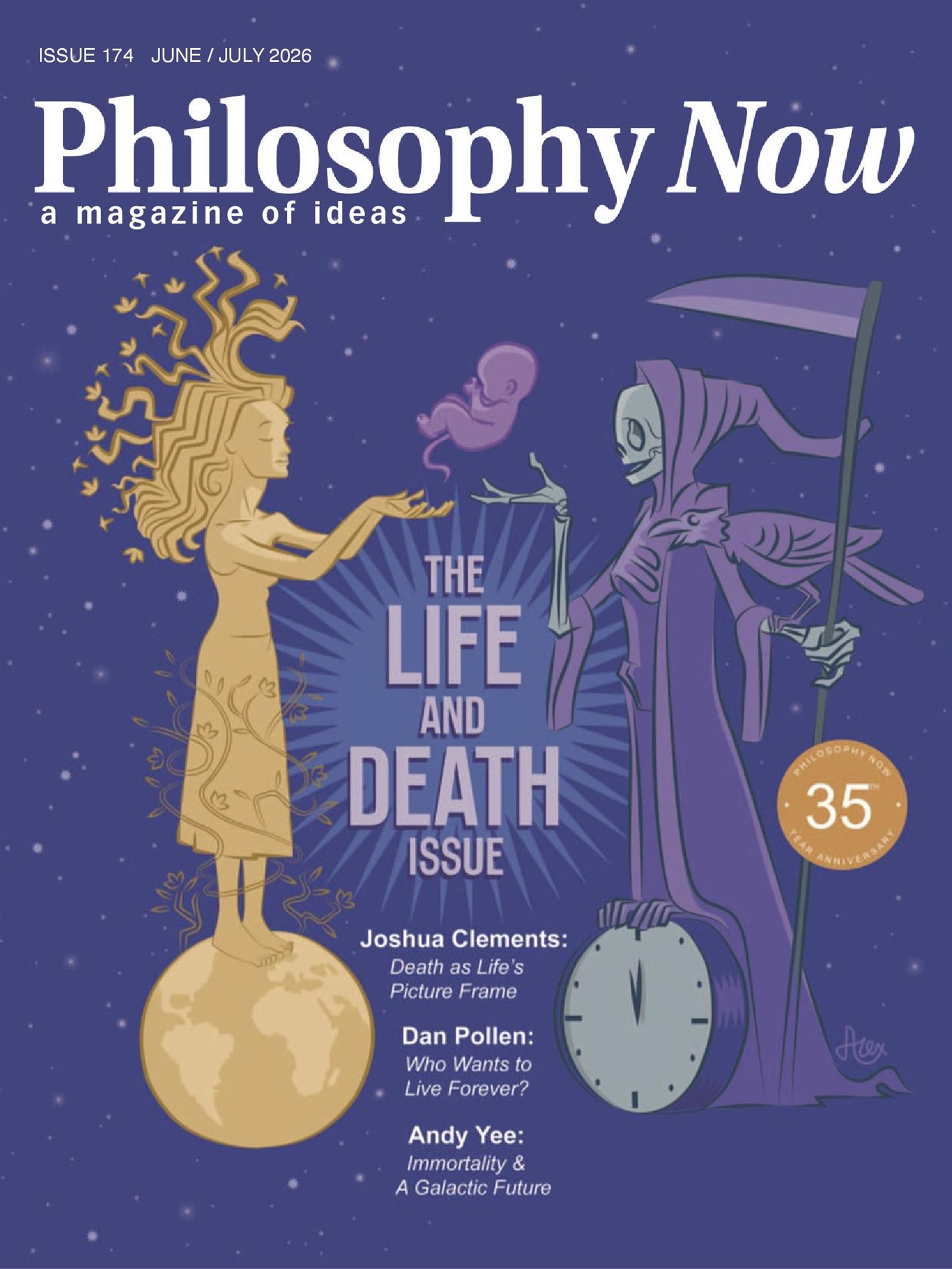
The Tragic Destiny of Life on Earth
The article explores the long-term prospects of life on Earth and the natural limits to its continued existence. Drawing on insights from cosmology, geology, and biology, it examines the conditions that make life possible as well as the processes that may ultimately threaten its survival. In doing so, it places questions of impermanence, adaptation, and the future of complex life within a broader scientific perspective.

In der aktuellen Ausgabe von Philosophy now

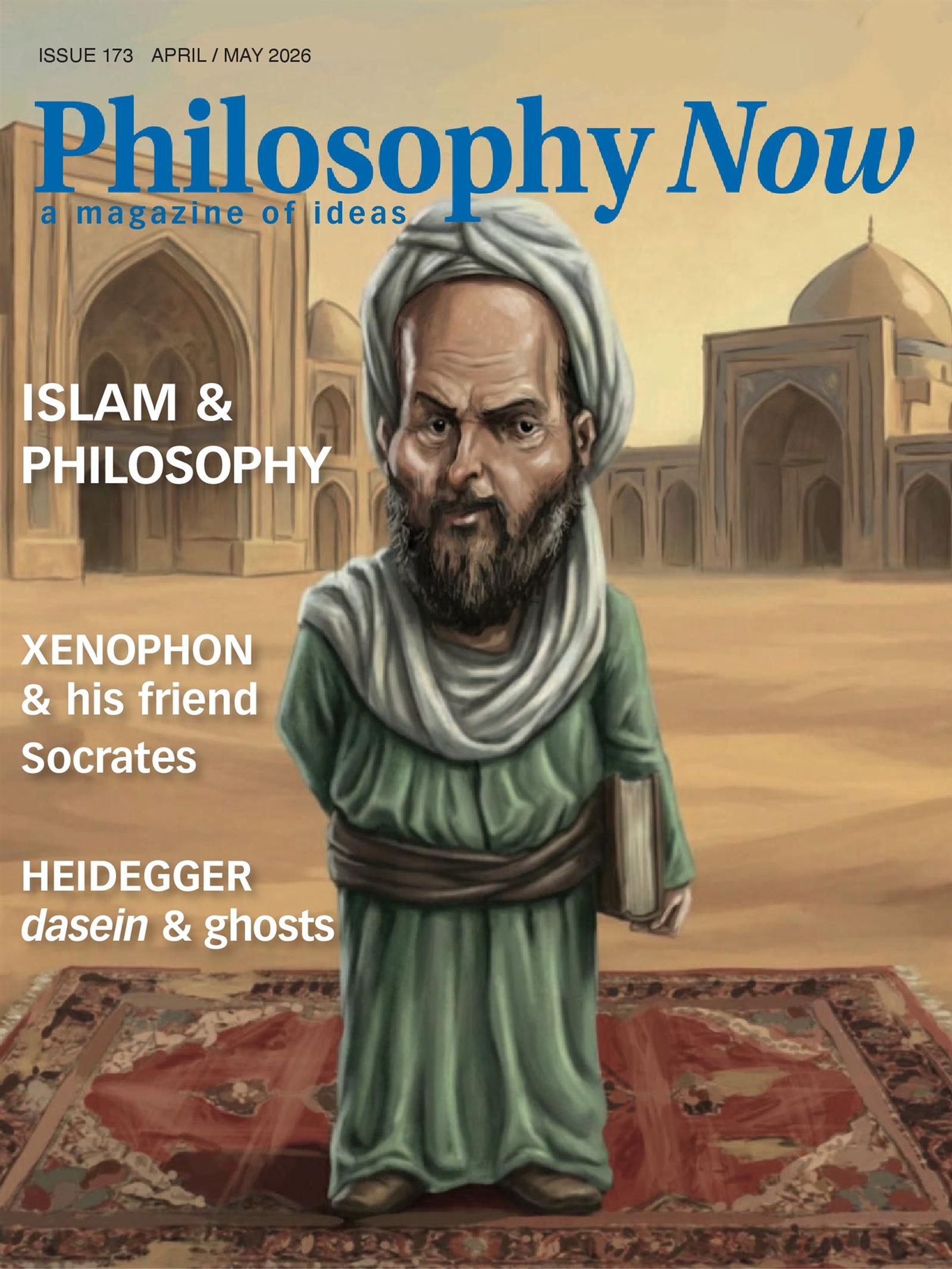
Ausgabe 173/2026

Why Do The Evil Still Prosper?
Each answer below receives a book. Apologies to the entrants not included.

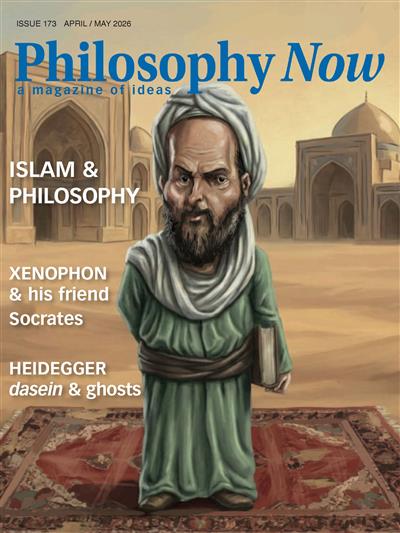
The Prayer the Machine Cannot Pray
Adnan Abbasi uses medieval metaphysics to understand modern AI.

In Ausgabe 173/2026 von Philosophy now

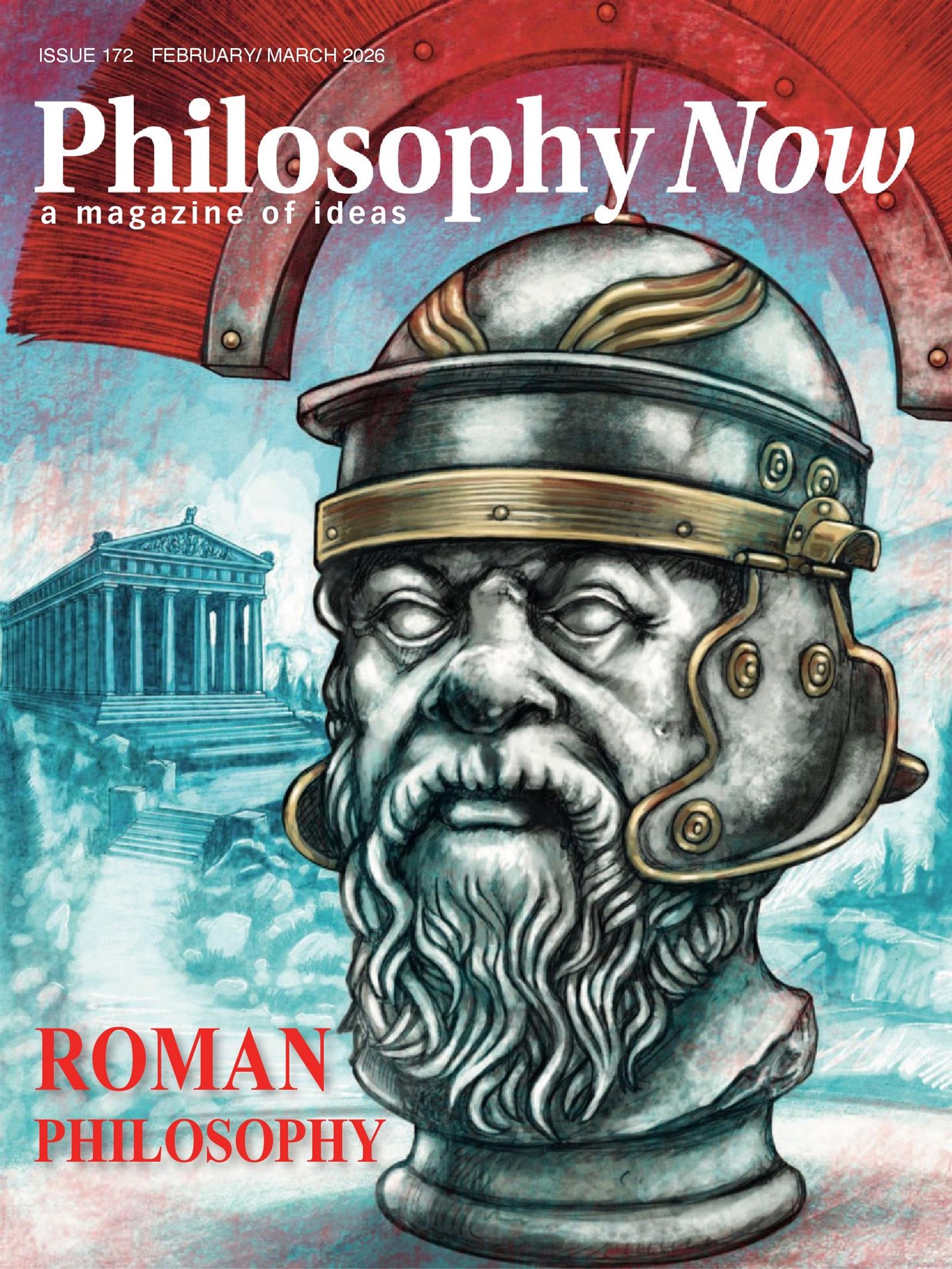
Ausgabe 172/2026

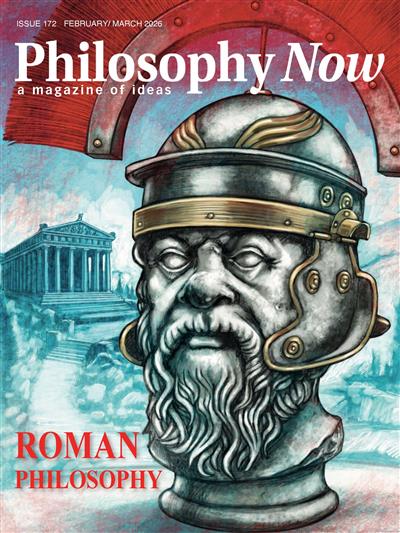
Cicero & the Ideal of Virtue
Abdullah Shaikh explores Cicero’s ideas about the core Roman principle of virtus.

A Very Short History of Critical Thinking
Luc de Brabandere summarises a long history through key figures of thought.

In Ausgabe 172/2026 von Philosophy now

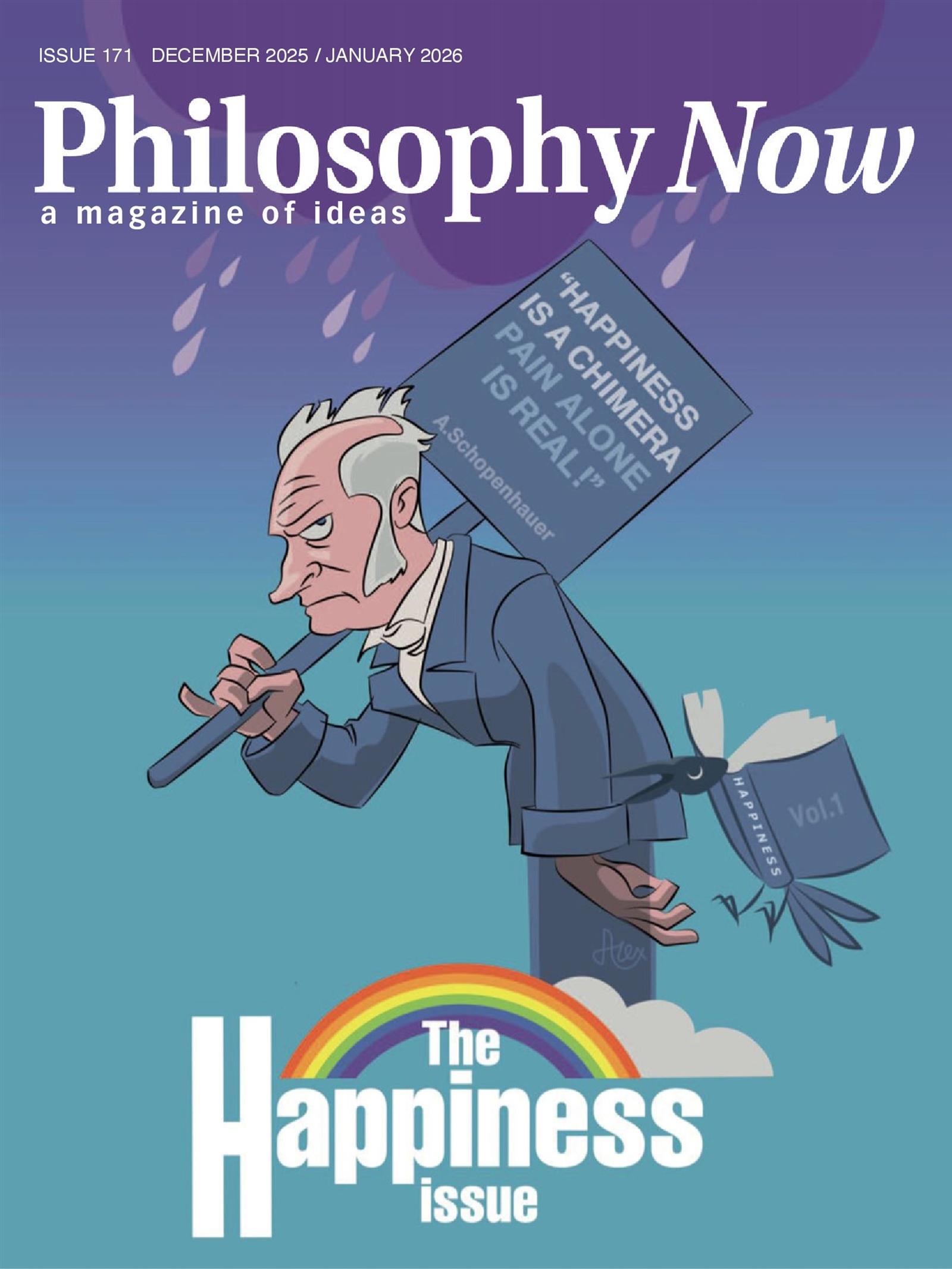
Ausgabe 171/2025

Question of the Month
Each answer below receives a random book. Apologies to the entrants not included.

What Women?
Marcia Yudkin remembers almost choking at Cornell.

In Ausgabe 171/2025 von Philosophy now

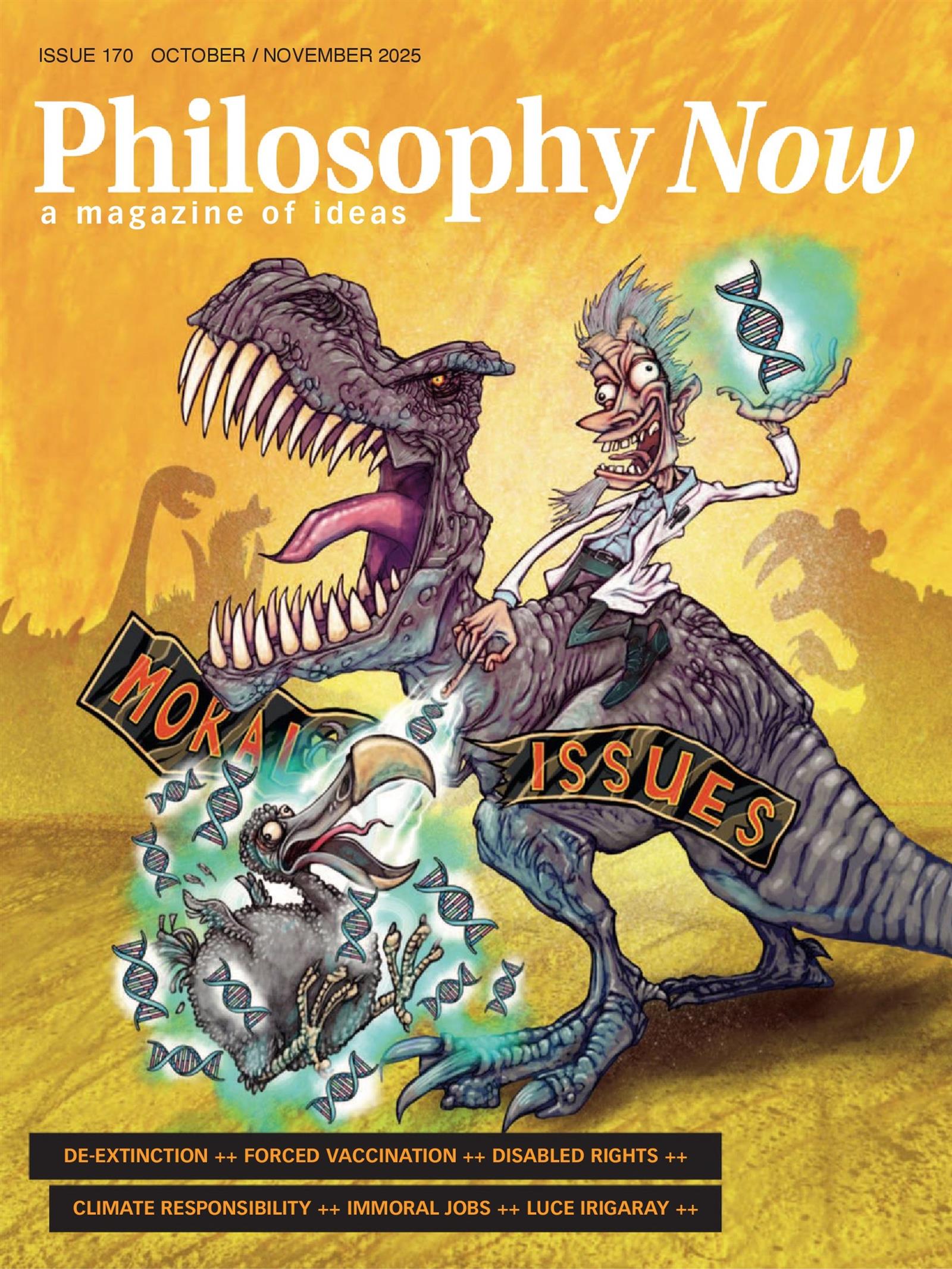
Ausgabe 170/2025


In Ausgabe 170/2025 von Philosophy now

Ausgabe 169/2025


In Ausgabe 169/2025 von Philosophy now

Mehr anzeigen

Porträt von Philosophy now

Das britische Magazin Philosophy now befasst sich damit, wie die Dinge in unserer Gesellschaft heute wirklich sind. Die Artikel und Debatten kreisen um spannende Konzepte, die auf unseren Alltag angewandt werden können und dabei helfen, die eigenen Ansichten und Denkgewohnheiten zu reflektieren.
Ein erfrischender und ehrlicher Blick auf Leben, Liebe, Religion, Wissenschaften und all die Dinge, die in einem Leben wirklich wichtig sind. Dabei hat jede Ausgabe des Magazins ein Hauptthema oder richtet den Fokus auf einen besonderen Philosophen der Geschichte.

Das Philosophie-Magazin – in englischer Sprache - richtet sich altersunabhängig an alle, die sich für Ideen und Debatten interessieren und die ihren Alltag und ihre Gedanken etwas mehr reflektieren möchten.
Weniger anzeigen

Philosophy now Abo

Abonnement
Einzelhefte

Wählen Sie Ihr Abo

Wann soll geliefert werden?

Wohin soll geliefert werden?
Sie möchten ein einzelnes Heft bestellen?
Wählen Sie Ihre
digitale Ausgabe
Sie möchten ein Abo abschließen?
Ausgabe
174/2026
Aktuelle Ausgabe

Margalit & Limits to Political Compromise
Drawing on Laure Gillot-Assayag’s reflections on the political philosophy of Avishai Margalit, the text examines central themes in his work, including morality, dignity, and the ethical foundations of political life. It places his thinking within broader debates in contemporary political philosophy and highlights its relevance to current social and ethical questions.

The Tragic Destiny of Life on Earth
The article explores the long-term prospects of life on Earth and the natural limits to its continued existence. Drawing on insights from cosmology, geology, and biology, it examines the conditions that make life possible as well as the processes that may ultimately threaten its survival. In doing so, it places questions of impermanence, adaptation, and the future of complex life within a broader scientific perspective.

Inhaltsverzeichnis
Ausgabe
173/2026

Why Do The Evil Still Prosper?
Each answer below receives a book. Apologies to the entrants not included.

The Prayer the Machine Cannot Pray
Adnan Abbasi uses medieval metaphysics to understand modern AI.

Inhaltsverzeichnis
Ausgabe
172/2026

Cicero & the Ideal of Virtue
Abdullah Shaikh explores Cicero’s ideas about the core Roman principle of virtus.

A Very Short History of Critical Thinking
Luc de Brabandere summarises a long history through key figures of thought.

Inhaltsverzeichnis
Ausgabe
171/2025

Question of the Month
Each answer below receives a random book. Apologies to the entrants not included.

What Women?
Marcia Yudkin remembers almost choking at Cornell.

Inhaltsverzeichnis
Ausgabe
170/2025


Inhaltsverzeichnis
Ausgabe
169/2025


Inhaltsverzeichnis
Mehr anzeigen

Porträt von Philosophy now

Das britische Magazin Philosophy now befasst sich damit, wie die Dinge in unserer Gesellschaft heute wirklich sind. Die Artikel und Debatten kreisen um spannende Konzepte, die auf unseren Alltag angewandt werden können und dabei helfen, die eigenen Ansichten und Denkgewohnheiten zu reflektieren.
Ein erfrischender und ehrlicher Blick auf Leben, Liebe, Religion, Wissenschaften und all die Dinge, die in einem Leben wirklich wichtig sind. Dabei hat jede Ausgabe des Magazins ein Hauptthema oder richtet den Fokus auf einen besonderen Philosophen der Geschichte.

Das Philosophie-Magazin – in englischer Sprache - richtet sich altersunabhängig an alle, die sich für Ideen und Debatten interessieren und die ihren Alltag und ihre Gedanken etwas mehr reflektieren möchten.
Weniger anzeigen
Leserbewertungen
1 Jahr Freude schenken!
Bei einer Auswahl von über 1.800 Magazinen finden Sie das richtige Geschenk für jeden.
Newsletter abonnieren
Jede Woche Informationen zu Magazinen, Trends, Gutscheinen, Aktionen und Angeboten von Presseshop. Alles direkt in Ihrem Posteingang.
Newsletter Bild

In der aktuellen Ausgabe von Philosophy now

  • News
    Jobs bonanza as AI companies recruit philosophers Researchers learn to ‘unwrap’ charred philosophy scrolls from Herculaneum
  • Hustle Culture & the Illusion of Freedom
     Daneyal Afaqui critiques modern work culture, with input from Theodor Adorno.
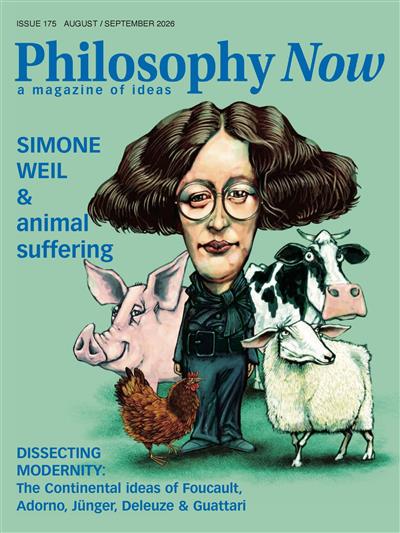
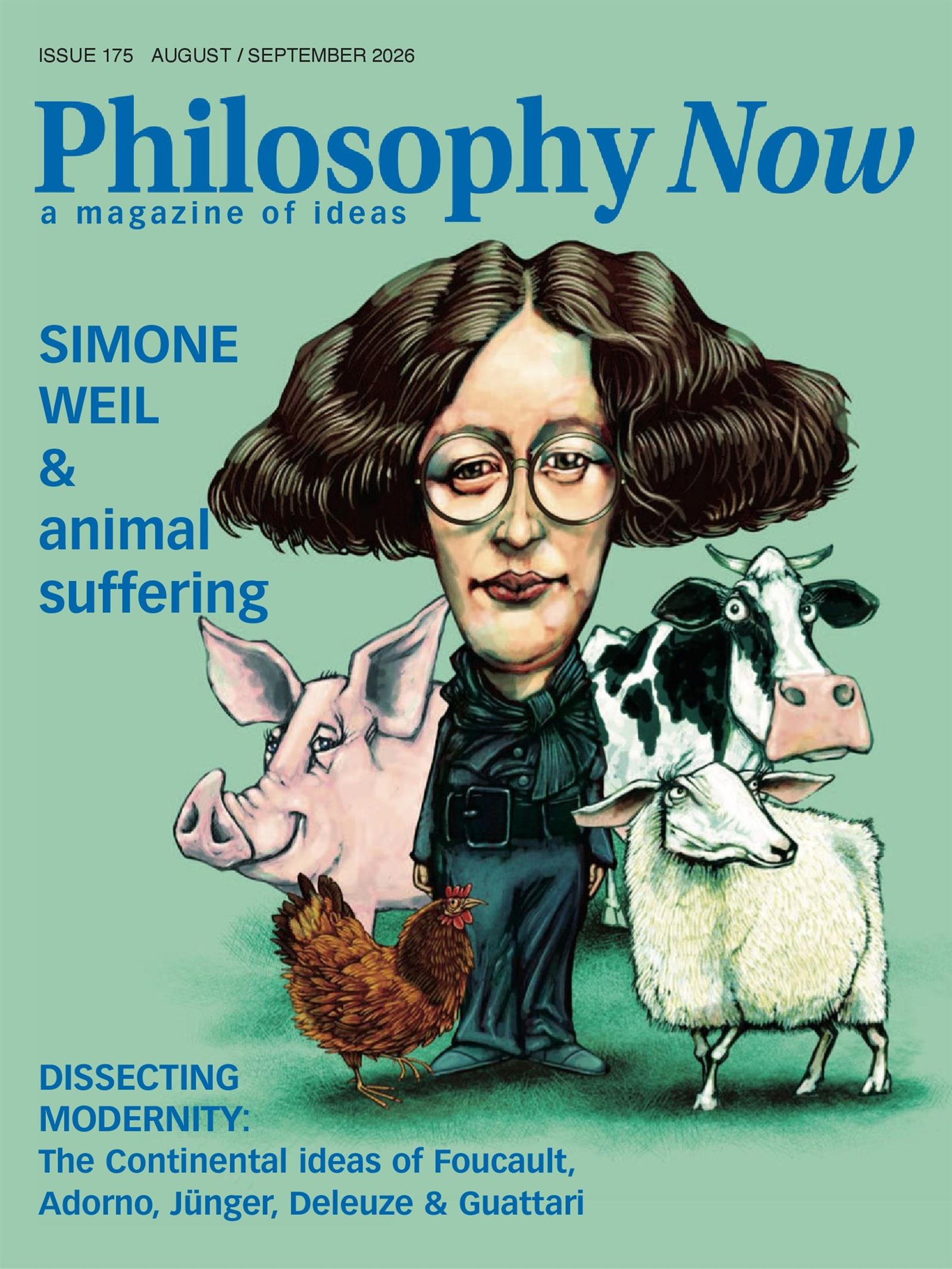
  • Simone Weil & Animal Suffering
    Michela Dianetti & Chiara Li Mandri say non-human beings don’t need to be persons for us to care about them. Simone Weil offers another way.
  • Why Classical Liberals Should Embrace Foucault
    Muzainy Shahiefisally argues that Foucault really is on the side of freedom.
  • The Strength of Quiet Rebellion
    T.S. Carney on Ernst Jünger and internal sovereignty.
  • Fun With Deleuze & Guattari
    DE Tarkington offers some cool conceptual tricks to impress your friends at parties.
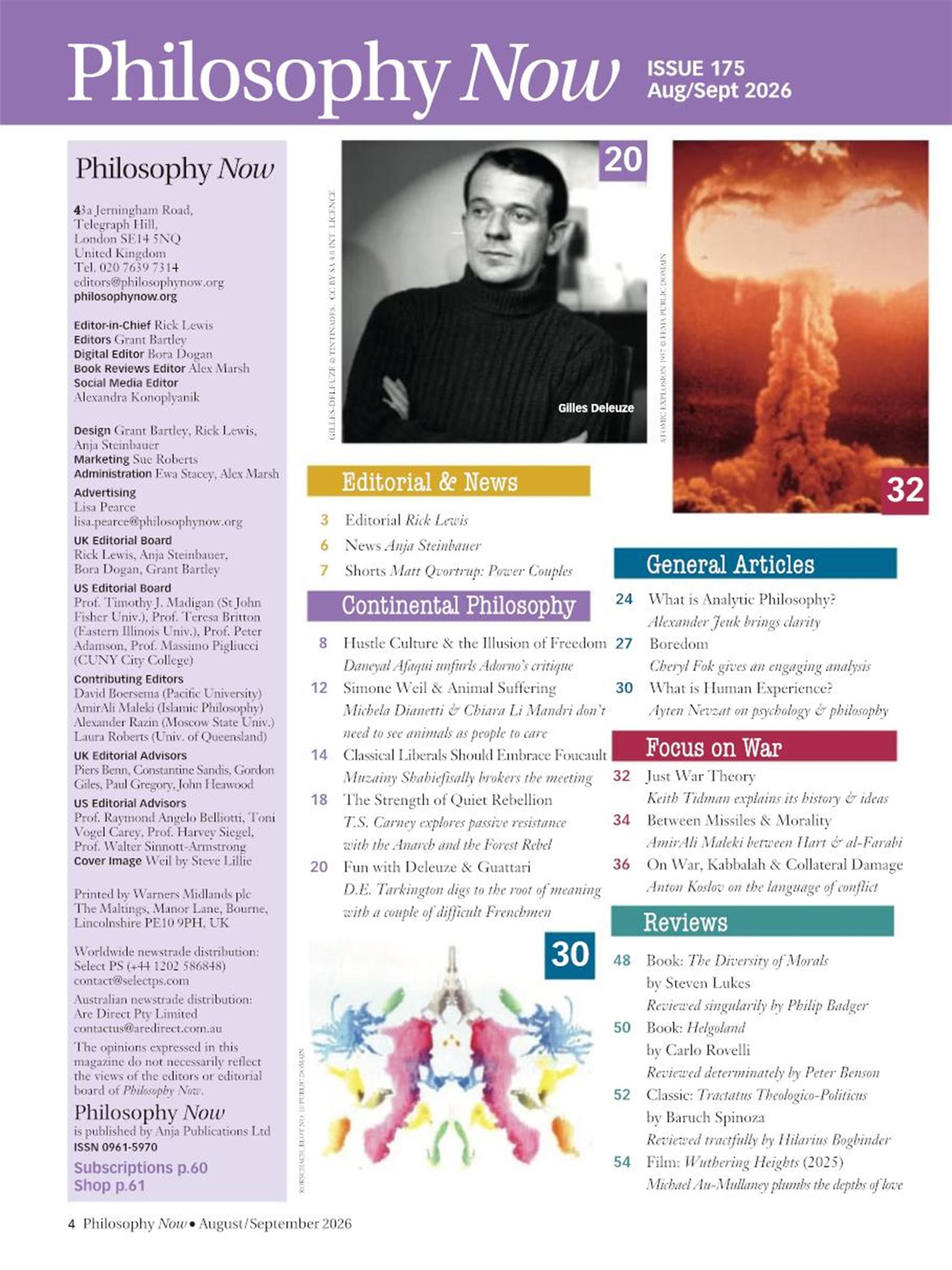
  • What is Analytic Philosophy?
    Alexander Jeuk analyses philosophical analysis with a philosophical eye.
  • BOREDOM
     Cheryl Fok searches for the source, and its relief.
  • What is Human Experience? Psychology vs Philosophy
    Ayten Nevzat watches philosophy give birth to a science.
  • Just War Theory
    Keith Tidman thinks the world’s bristling arsenals and proneness to wars makes it all the more urgent.
  • Between Missiles & Morality
     AmirAli Maleki considers Hart, al-Farabi, and the Puzzled Man in wartime.
  • On War, Kabbalah & Collateral Damage
    Anton Koslov takes a concept from the Kabbalah to understand the nature of war.
  • Interview
    Ulrich Metschl is an associate professor at the University of Innsbruck, Austria. Thiago Pinho talks with him about philosophical collaborations.
  • Julian the Apostate (331-363)
    Eli Sclar reports on a weaponizer of tolerance.
  • Letters
    When inspiration strikes, don’t bottle it up. Email me at rick.lewis@philosophynow.org Keep them short and keep them coming!
  • The Diversity of Morals
    Philip Badger considers Steven Lukes’ views about the diversity of morality, and Peter Benson marvels at Carlo Rovelli’s relational quantum theory. In Classics, we look at the book that got Baruch Spinoza barred from his synagogue.
  • WUTHERING HEIGHTS
    Michael Au-Mullaney on K.E. Løgstrup on love.
  • Cicero & the Value of Skepticism
    Massimo Pigliucci is not skeptical about skepticism itself.
  • Martin Heidegger & the Evaporation of Freedom
    Raymond Tallis watches freedom disappear in a puff of Heideggerian smoke.
  • What’s A Good 1000-Year Plan?
    Each answer below receives a random book. Apologies to the entrants not included.
  • The Day of Ashes
     Adam Farnsworth visits a future that reveres the philosophy of Georges Bataille.
Newsletter
Kontakt