
Philosophy now Abo

Ausgabe 174/2026
Aktuelle Ausgabe

Margalit & Limits to Political Compromise
Drawing on Laure Gillot-Assayag’s reflections on the political philosophy of Avishai Margalit, the text examines central themes in his work, including morality, dignity, and the ethical foundations of political life. It places his thinking within broader debates in contemporary political philosophy and highlights its relevance to current social and ethical questions.

The Tragic Destiny of Life on Earth
The article explores the long-term prospects of life on Earth and the natural limits to its continued existence. Drawing on insights from cosmology, geology, and biology, it examines the conditions that make life possible as well as the processes that may ultimately threaten its survival. In doing so, it places questions of impermanence, adaptation, and the future of complex life within a broader scientific perspective.
In der aktuellen Ausgabe von Philosophy now

Ausgabe 173/2026

Why Do The Evil Still Prosper?
Each answer below receives a book. Apologies to the entrants not included.

The Prayer the Machine Cannot Pray
Adnan Abbasi uses medieval metaphysics to understand modern AI.
In Ausgabe 173/2026 von Philosophy now

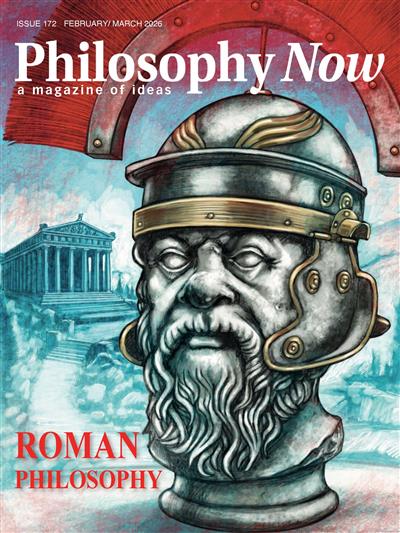
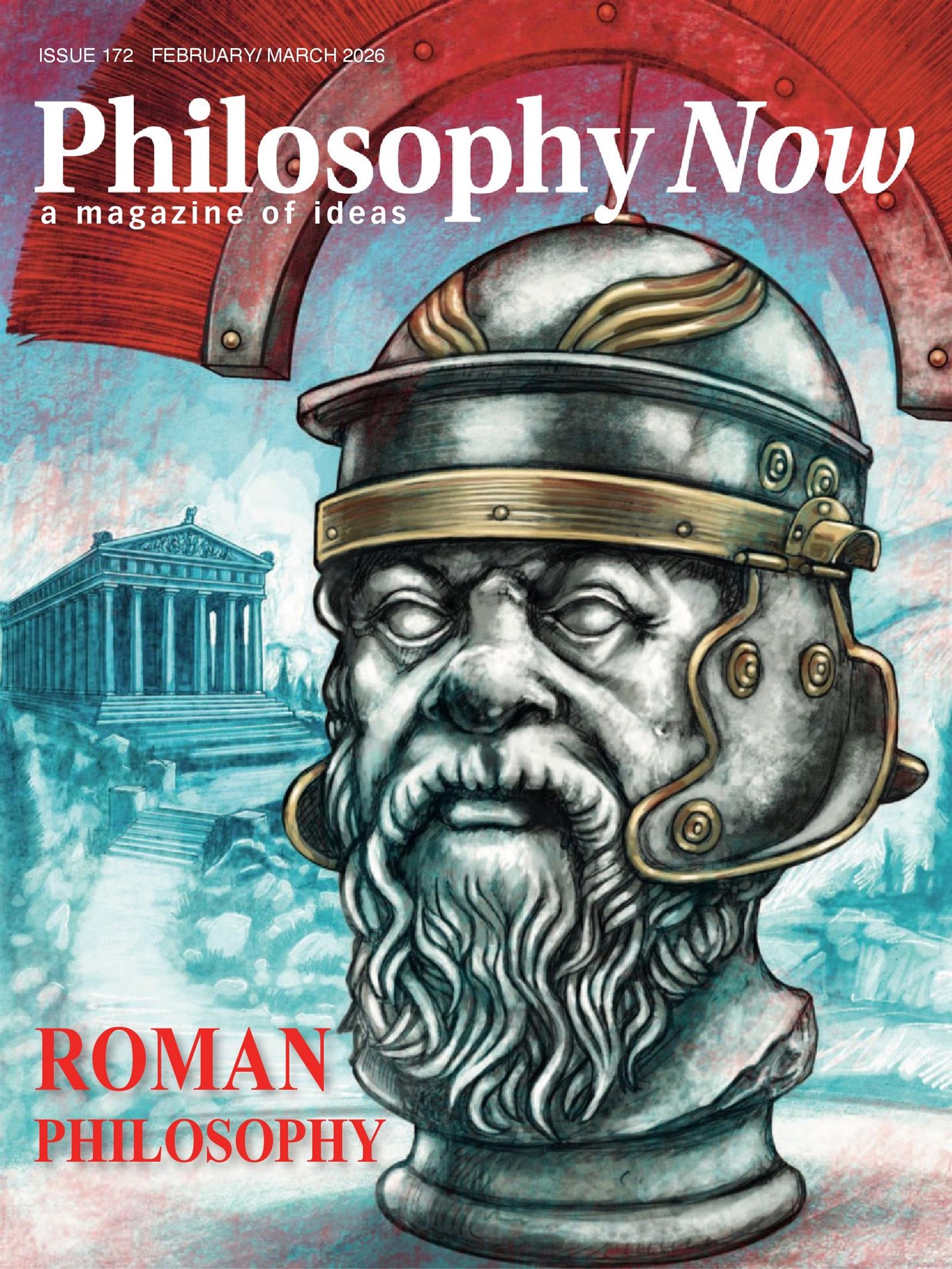
Ausgabe 172/2026

Cicero & the Ideal of Virtue
Abdullah Shaikh explores Cicero’s ideas about the core Roman principle of virtus.

A Very Short History of Critical Thinking
Luc de Brabandere summarises a long history through key figures of thought.
In Ausgabe 172/2026 von Philosophy now

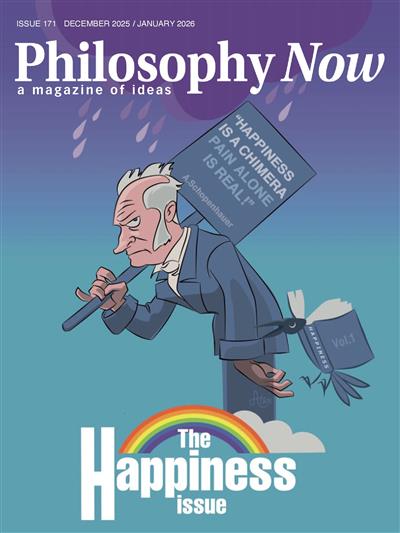
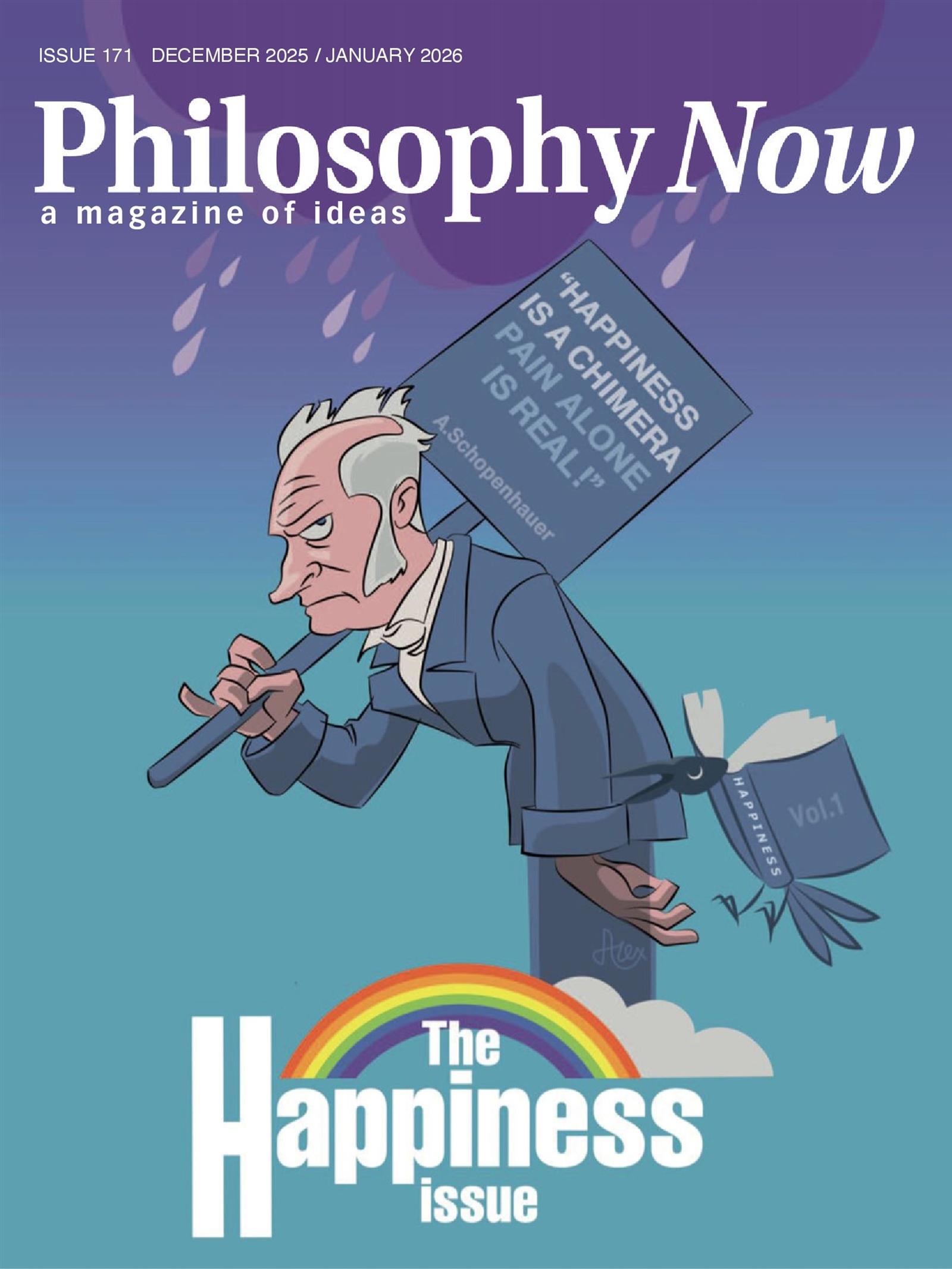
Ausgabe 171/2025

Question of the Month
Each answer below receives a random book. Apologies to the entrants not included.

What Women?
Marcia Yudkin remembers almost choking at Cornell.
In Ausgabe 171/2025 von Philosophy now

Ausgabe 170/2025

The Mediation of Touch
A conversation between Emma Jones and Luce Irigaray.

Moral Decision-Making for a Job Search
Norman Schultz wonders when working is wrong.

In Ausgabe 170/2025 von Philosophy now

Ausgabe 169/2025


In Ausgabe 169/2025 von Philosophy now

Mehr anzeigen

Porträt von Philosophy now

Das britische Magazin Philosophy now befasst sich damit, wie die Dinge in unserer Gesellschaft heute wirklich sind. Die Artikel und Debatten kreisen um spannende Konzepte, die auf unseren Alltag angewandt werden können und dabei helfen, die eigenen Ansichten und Denkgewohnheiten zu reflektieren.
Ein erfrischender und ehrlicher Blick auf Leben, Liebe, Religion, Wissenschaften und all die Dinge, die in einem Leben wirklich wichtig sind. Dabei hat jede Ausgabe des Magazins ein Hauptthema oder richtet den Fokus auf einen besonderen Philosophen der Geschichte.

Das Philosophie-Magazin – in englischer Sprache - richtet sich altersunabhängig an alle, die sich für Ideen und Debatten interessieren und die ihren Alltag und ihre Gedanken etwas mehr reflektieren möchten.
Weniger anzeigen

Philosophy now Abo

Abonnement
Einzelhefte

Wählen Sie Ihr Abo

Wann soll geliefert werden?

Wohin soll geliefert werden?
Sie möchten ein einzelnes Heft bestellen?
Wählen Sie Ihre
digitale Ausgabe
Sie möchten ein Abo abschließen?
Ausgabe
174/2026
Aktuelle Ausgabe

Margalit & Limits to Political Compromise
Drawing on Laure Gillot-Assayag’s reflections on the political philosophy of Avishai Margalit, the text examines central themes in his work, including morality, dignity, and the ethical foundations of political life. It places his thinking within broader debates in contemporary political philosophy and highlights its relevance to current social and ethical questions.

The Tragic Destiny of Life on Earth
The article explores the long-term prospects of life on Earth and the natural limits to its continued existence. Drawing on insights from cosmology, geology, and biology, it examines the conditions that make life possible as well as the processes that may ultimately threaten its survival. In doing so, it places questions of impermanence, adaptation, and the future of complex life within a broader scientific perspective.

Inhaltsverzeichnis
Ausgabe
173/2026

Why Do The Evil Still Prosper?
Each answer below receives a book. Apologies to the entrants not included.

The Prayer the Machine Cannot Pray
Adnan Abbasi uses medieval metaphysics to understand modern AI.

Inhaltsverzeichnis
Ausgabe
172/2026

Cicero & the Ideal of Virtue
Abdullah Shaikh explores Cicero’s ideas about the core Roman principle of virtus.

A Very Short History of Critical Thinking
Luc de Brabandere summarises a long history through key figures of thought.

Inhaltsverzeichnis
Ausgabe
171/2025

Question of the Month
Each answer below receives a random book. Apologies to the entrants not included.

What Women?
Marcia Yudkin remembers almost choking at Cornell.

Inhaltsverzeichnis
Ausgabe
170/2025

The Mediation of Touch
A conversation between Emma Jones and Luce Irigaray.

Moral Decision-Making for a Job Search
Norman Schultz wonders when working is wrong.

Inhaltsverzeichnis
Ausgabe
169/2025


Inhaltsverzeichnis
Mehr anzeigen

Porträt von Philosophy now

Das britische Magazin Philosophy now befasst sich damit, wie die Dinge in unserer Gesellschaft heute wirklich sind. Die Artikel und Debatten kreisen um spannende Konzepte, die auf unseren Alltag angewandt werden können und dabei helfen, die eigenen Ansichten und Denkgewohnheiten zu reflektieren.
Ein erfrischender und ehrlicher Blick auf Leben, Liebe, Religion, Wissenschaften und all die Dinge, die in einem Leben wirklich wichtig sind. Dabei hat jede Ausgabe des Magazins ein Hauptthema oder richtet den Fokus auf einen besonderen Philosophen der Geschichte.

Das Philosophie-Magazin – in englischer Sprache - richtet sich altersunabhängig an alle, die sich für Ideen und Debatten interessieren und die ihren Alltag und ihre Gedanken etwas mehr reflektieren möchten.
Weniger anzeigen
Leserbewertungen
1 Jahr Freude schenken!
Bei einer Auswahl von über 1.800 Magazinen finden Sie das richtige Geschenk für jeden.
Newsletter abonnieren
Jede Woche Informationen zu Magazinen, Trends, Gutscheinen, Aktionen und Angeboten von Presseshop. Alles direkt in Ihrem Posteingang.
Newsletter Bild

In der aktuellen Ausgabe von Philosophy now

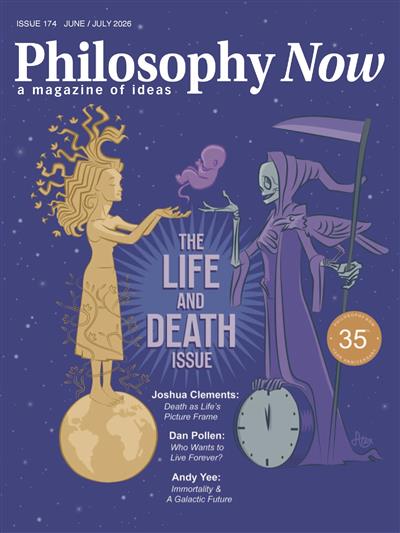
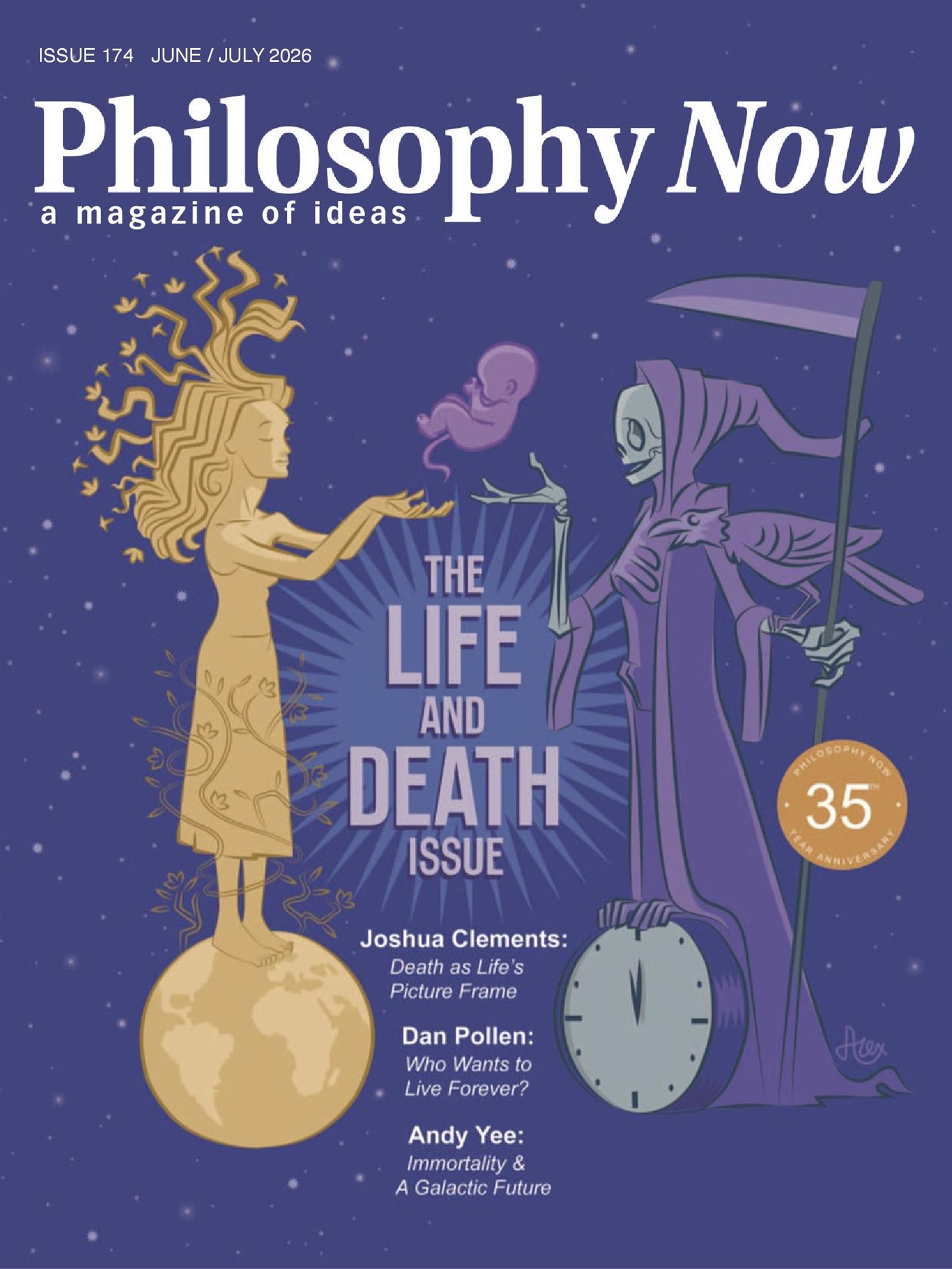
  • A Critique of Antinatalism
    Deniz Kose thinks there’s good reasons to want human life to continue.
  • Death as Life’s Picture Frame
    Joshua Clements puts us in the picture.
  • Who Wants to Live Forever?
    The desire for a longer - or even unlimited - lifespan is among humanity’s oldest aspirations. The discussion focuses on philosophical, ethical, and societal reflections on mortality, life extension, and human finitude. It examines both the opportunities and challenges associated with longer lives, as well as their implications for individuals, communities, and the understanding of a meaningful life.
  • Immortality & A Galactic Future
    Andy Yee looks forward to humanity’s technological ascension.
  • Margalit & Limits to Political Compromise
    Drawing on Laure Gillot-Assayag’s reflections on the political philosophy of Avishai Margalit, the text examines central themes in his work, including morality, dignity, and the ethical foundations of political life. It places his thinking within broader debates in contemporary political philosophy and highlights its relevance to current social and ethical questions.
  • What’s the Value of Mountaineering?
    Suleyman Moollan wonders why people climb mountains.
  • Why Sport Needs Good & Evil
    Kola Adeosun & Ato Kenya Rockcliffe on the dynamics of sporting greatness.
  • Carl Schmitt (1888-1985)
    Marco Pandolfini on the ideas of a highly contentious legal theorist.
  • Nexus
    Frank S. Robinson ponders our AI future while Priya Muthukannan studies a philosophy of compassion. In our Classics review, Teresa Candeias reads Hannah Arendt’s Eichmann in Jerusalem.
  • The Tragic Destiny of Life on Earth
    The article explores the long-term prospects of life on Earth and the natural limits to its continued existence. Drawing on insights from cosmology, geology, and biology, it examines the conditions that make life possible as well as the processes that may ultimately threaten its survival. In doing so, it places questions of impermanence, adaptation, and the future of complex life within a broader scientific perspective.
Newsletter
Kontakt